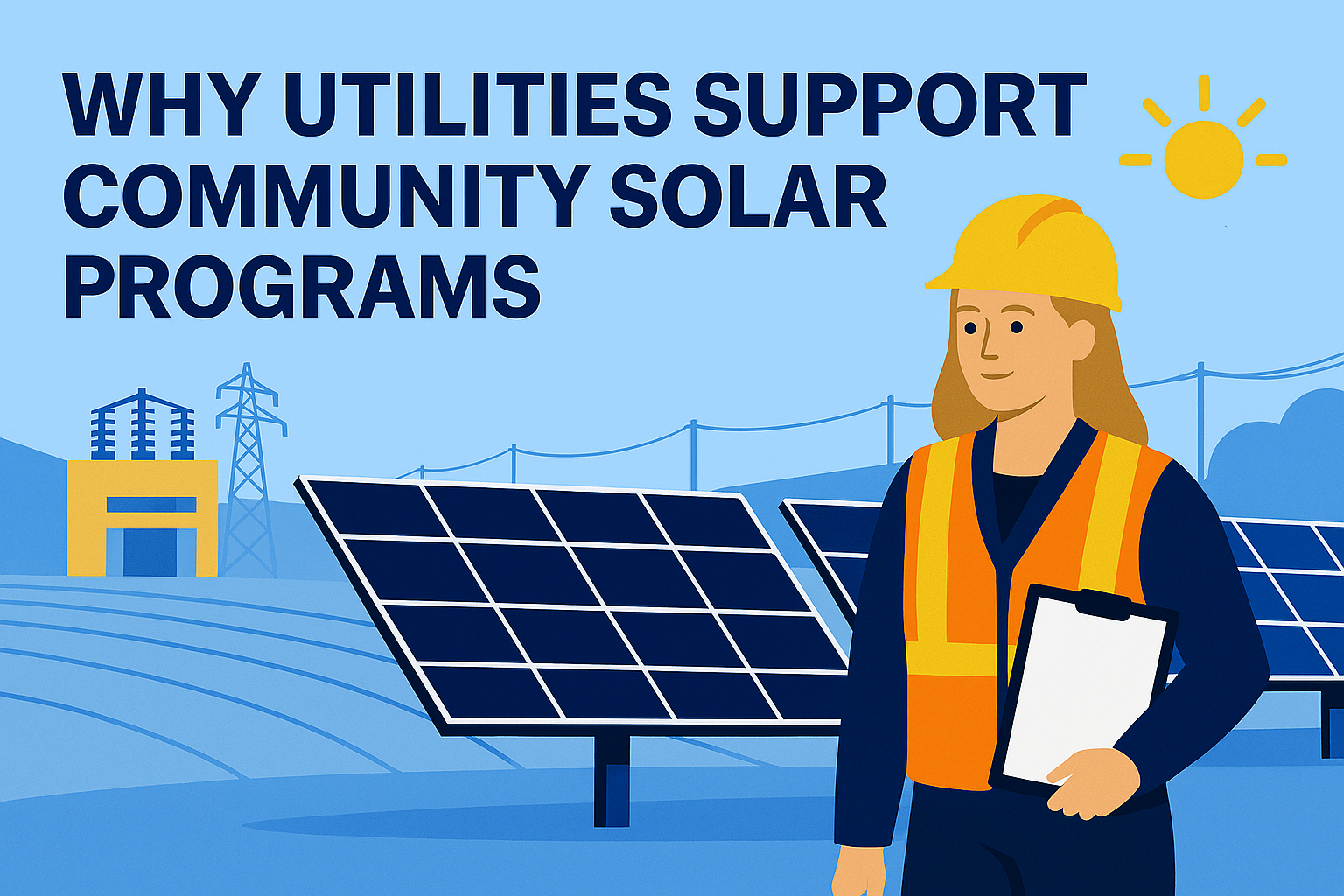

Community solar is expanding rapidly across the United States, thanks to state legislation designed to make clean energy more accessible and affordable. If you’ve heard of community solar but aren’t sure how it works—or why so many states support it—this guide explains everything you need to know.
We’ll cover why states passed community solar laws, how community solar impacts the electric grid, and why residents and small businesses should consider enrolling when it’s available.
What Is Community Solar?
Community solar allows residents and businesses to subscribe to a shared local solar project instead of installing solar panels on their own property.
When you enroll:
- The solar project sends power to the local electric grid
- Your utility applies solar bill credits to your monthly electricity bill
- You continue receiving service from your existing utility
There’s typically no upfront cost, no roof installation, and no equipment to maintain.
Why States Passed Community Solar Legislation
1. Expanding Access to Solar Energy
Before community solar laws, most people couldn’t benefit from solar unless they owned a suitable roof. State lawmakers recognized this excluded:
- Renters and apartment residents
- Homeowners with shaded or aging roofs
- Small businesses without installation options
Community solar legislation removes those barriers, making solar available to a much broader population.
2. Reducing Pressure on the Power Grid
Community solar supports a more resilient and efficient electric grid by:
- Generating power near where it’s used
- Reducing strain on long‑distance transmission lines
- Supporting demand during peak usage periods
By spreading energy generation across many projects, states reduce dependence on centralized power plants.
3. Encouraging Clean Energy Without Taxpayer Costs
Most community solar projects are privately developed but enabled by state policy. This allows states to:
- Expand renewable energy capacity
- Attract private investment
- Create local jobs
—all without increasing taxes or utility construction costs.
4. Helping Households and Businesses Save Money
Electricity prices have risen steadily in many regions. Community solar helps address affordability by allowing subscribers to:
- Receive credits that reduce electricity bills
- Avoid installation, maintenance, or long‑term commitments
- Benefit from solar savings without financial risk
This makes community solar appealing for households and small businesses alike.
How Community Solar Impacts Residents
For residents, community solar offers:
- Lower electricity costs through monthly bill credits
- No disruption to daily life or power usage
- Flexibility, since subscriptions can often be cancelled or transferred
It’s one of the simplest ways to participate in renewable energy without owning property or equipment.
How Community Solar Helps Small Businesses
Small businesses can use community solar to:
- Reduce operating expenses
- Improve sustainability goals
- Participate in clean energy without capital investment
For many businesses, community solar is one of the most accessible energy‑saving options available.
Why Community Solar Availability Is Sometimes Limited
Community solar depends on:
- State‑level legislation
- Utility company participation
- Available solar project capacity
In high‑demand areas, customers may be placed on a waitlist until new projects become available. Being on a waitlist ensures you can enroll as soon as capacity opens.
Why You Should Enroll When Community Solar Is Available
Community solar combines:
- Low or no upfront costs
- Minimal risk
- Potential ongoing savings
- Support for local clean energy
That’s why enrollment opportunities can fill quickly in eligible states. When community solar is available in your utility territory, enrolling early helps ensure access.
The Bottom Line
States passed community solar legislation to make solar energy more accessible, strengthen the power grid, and reduce electricity costs for residents and businesses.
For customers, community solar offers an easy way to benefit from renewable energy—without installing panels or changing utilities. When programs are available, taking advantage of them can lead to real savings and long‑term benefits.